





Introduction
VPD mode includes two trigger types: high VPD and low VPD. Press the Mode button to display the corresponding trigger, then use the Up and Down buttons to set the trigger value. In VPD mode, both triggers can become active at the same time, even if you're not currently viewing the corresponding trigger. Disable the trigger you don't need by pressing the Up and Down buttons at the same time, to prevent it from interfering with your active triggers. Most applications only need one trigger. VPD mode triggers can also be affected by your Max/Min level, Transition, and Buffer settings.
VPD Mode (High VPD Trigger)
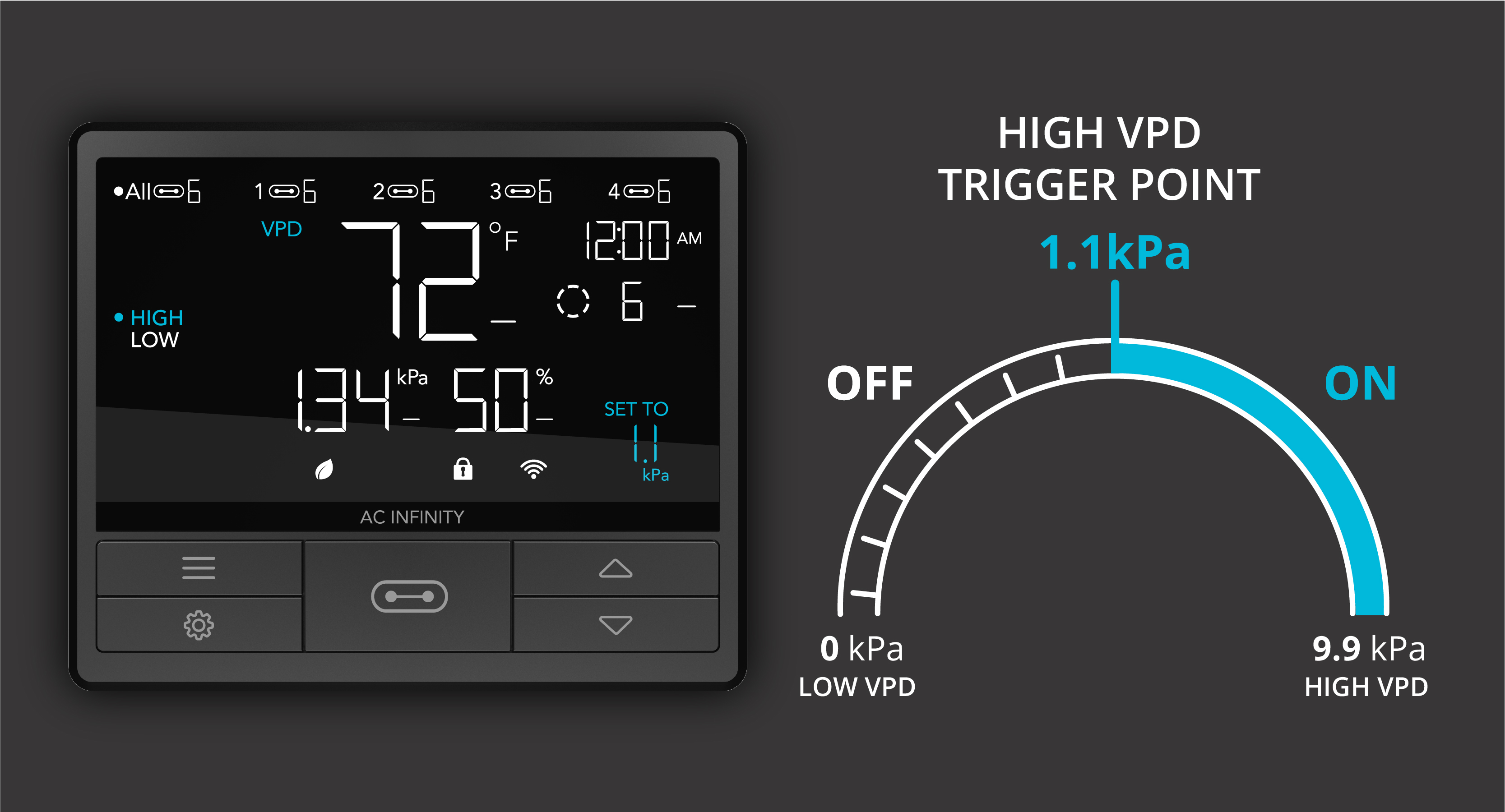
The high VPD trigger activates your device when VPD reaches or exceeds the set value. Example: if you set a high VPD trigger of 1.1 kPa, your device activates as soon as VPD rises to 1.1 kPa or higher, and turns off again once VPD drops below 1.1 kPa.
VPD Mode (Low VPD Trigger)
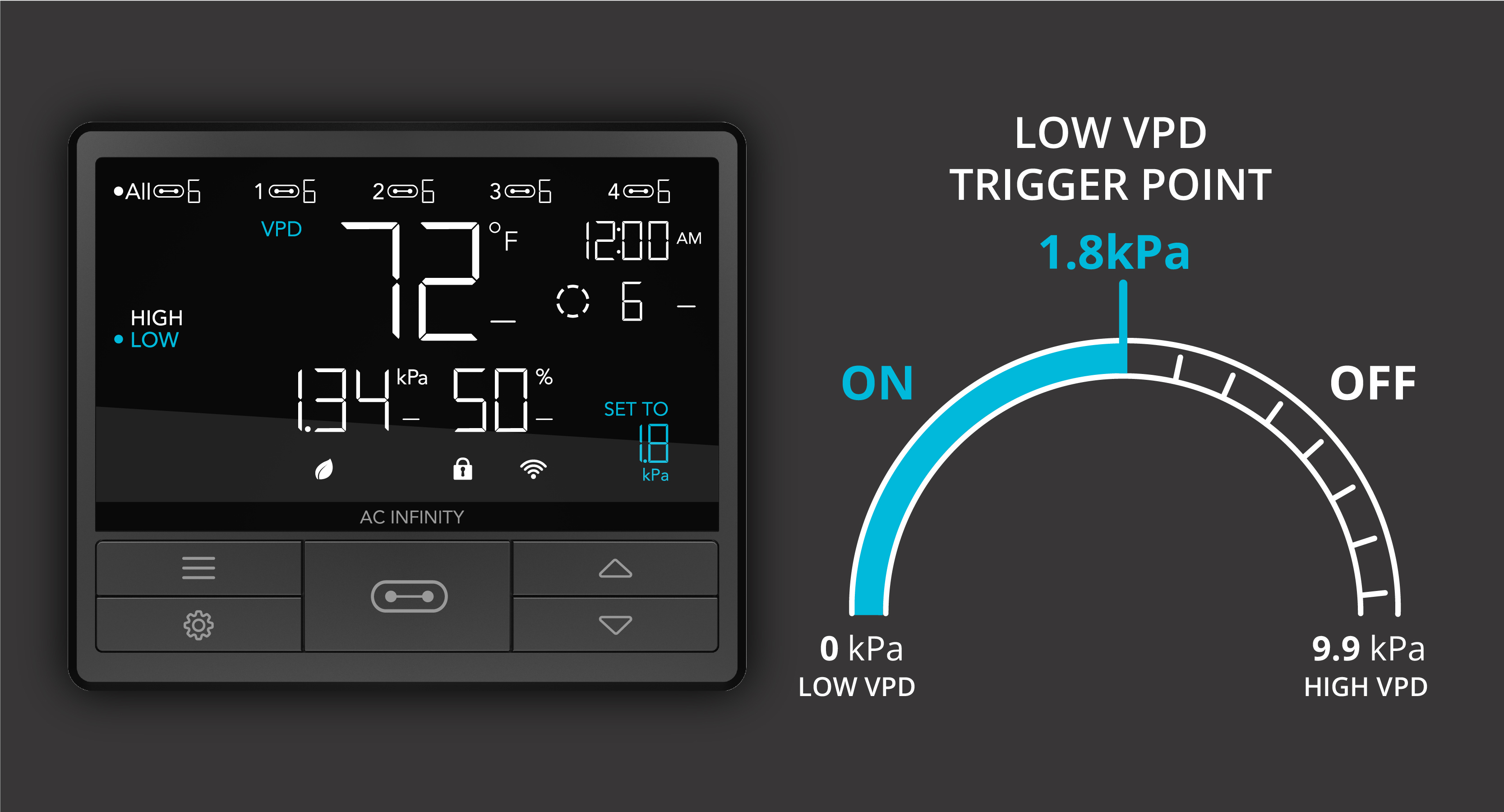
The low VPD trigger activates your device when VPD reaches or falls below the set value. Example: if you set a low VPD trigger of 1.8 kPa, your device activates as soon as VPD drops to 1.8 kPa or lower, and turns off again once VPD rises above 1.8 kPa.
Settings That Affect Your Program
- Max and Min Level Settings – all program modes can be limited by these settings. When the device is set to OFF, it runs at the set minimum level. When set to ON, it runs up to the set maximum level. The Max/Min level corresponds to the values set in ON and OFF modes.
- Transition Setting – programs the device to dynamically adjust its power levels, based on the difference between temperature/humidity and your target value.
- Buffer Setting – adds a buffer to your VPD triggers to prevent your device from turning on and off too quickly.


